Wondering what do white ants look like before they destroy your Toronto home? You’re not alone. “White ants” is the common Canadian term for termites, particularly the destructive subterranean species found across Ontario. These pale, creamy pests work silently behind walls and under floors, causing thousands in damage before you ever spot one.
Understanding what do white ants look like is critical for early detection in Canada harsh climate, where they seek warm, moist indoor spaces. Unlike scavenger ants, termites eat wood cellulose literally consuming your home’s structure from the inside out.
This guide covers white ant identification at every life stage, larvae appearance, damage signs, and why “white ants” are actually termites.
What Do White Ants Look Like? Key Identification Features
When trying to identify these destructive pests, knowing what do white ants look like can save you from costly repairs. Adult white ants have several distinctive physical characteristics that set them apart from regular ants:
Physical Appearance:
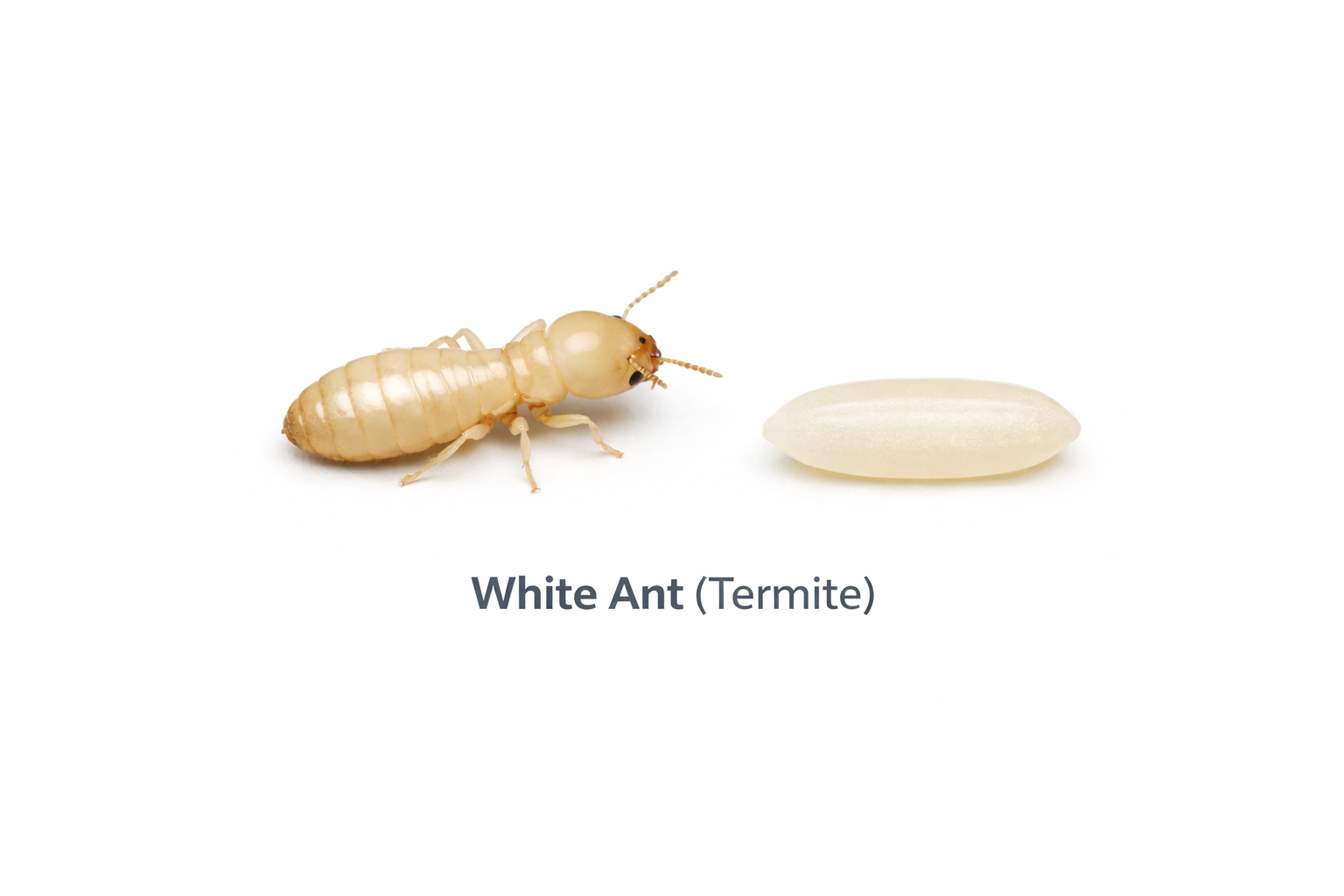
- Color: Pale white to creamy ivory bodies—not pure white as their name suggests. Workers typically appear translucent in certain lighting.
- Body Structure: Soft-bodied insects with no hard exoskeleton, unlike the armored appearance of black ants.
- Size: Range from 1/4 to 1/2 inch in length, comparable to a grain of rice.
- Antennae: Straight, bead-like antennae rather than the elbowed antennae of true ants.
- Legs: Six legs attached to a relatively uniform body without the narrow “wasp waist” of ants.
- Wings: Most workers are wingless, but reproductive alates (swarmers) have two pairs of equal-length wings that they shed after mating.
What Color Are White Ants?
Many people expect pure white insects, but they typically range from pale cream to light brown or yellowish-white depending on their caste and age. This coloration helps them blend into their wooden environments.
Are White Ants Visible to the eye?
Absolutely despite their sneaky habits, the insects themselves are visible. However, they prefer dark, humid environments and often remain hidden within wood or soil, making direct sightings rare until an infestation is well-established.
Visual Comparison Tips For White Ants:
- Think of rice grains or small maggots when imagining their size and shape
- Unlike ants, they don’t have a pinched waist between thorax and abdomen
- Their soft bodies appear almost grub-like rather than segmented and shiny
What Do Baby White Ants Look Like?
Understanding the early life stages is crucial for catching infestations before they explode into full-blown colonies. So, what do baby white ants look like?
Baby white ants, properly called nymphs, are essentially miniature versions of adult workers:
- Size: Approximately 1/8 inch when newly hatched—about half the size of adults
- Appearance: Soft, white bodies that are even more translucent than mature workers
- Development: As nymphs mature through molting stages, they gradually develop the characteristics of their specific caste (workers, soldiers, or reproductives)
- Late-stage nymphs: May show developing wing buds if destined to become alates (future kings and queens)
The Complete Life Cycle of White Ants:
- Eggs: Tiny white pearl-like structures laid by the queen in protected nursery chambers
- Young nymphs: Recently hatched, nearly microscopic, requiring care from worker termites
- Developing nymphs: Growing rapidly, beginning to assist with colony tasks
- Mature adults: Fully developed members of their designated caste
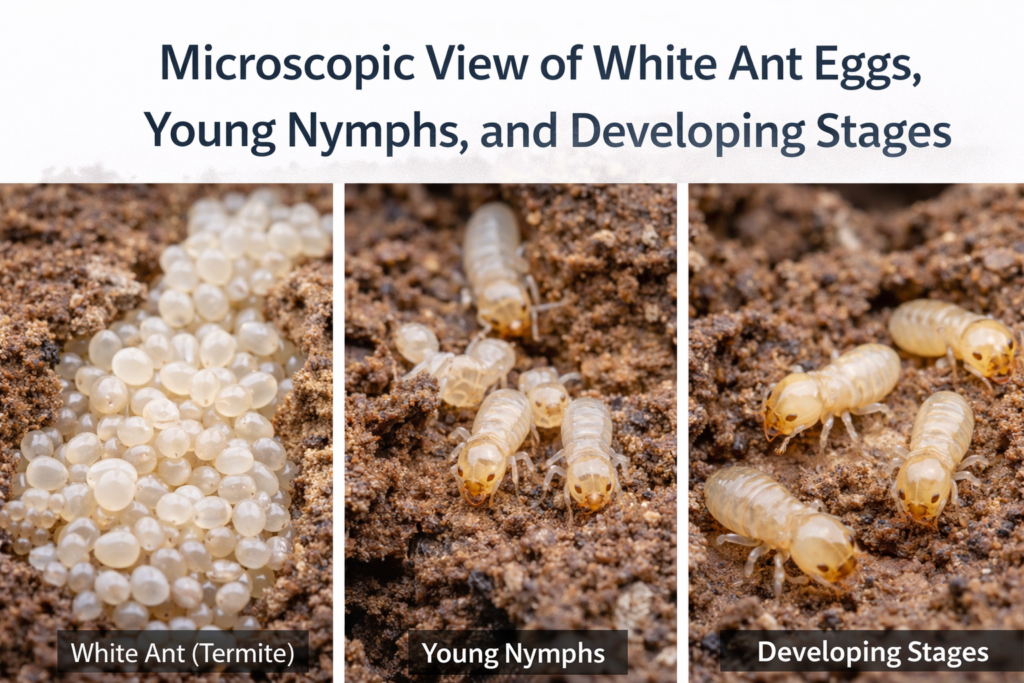
Why Early Detection Matters:
Spotting baby white ants indicates an active, breeding colony. A single queen can lay thousands of eggs daily, meaning a small problem can become a massive infestation within months. If you discover nymphs during home repairs or renovations, immediate professional intervention is essential.
What Do White Ant Larvae Look Like?
Many people confuse different life stages, so let’s clarify: what do white ant larvae look like and how do they differ from nymphs?
Larval Characteristics:
- Shape: Distinctively C-shaped or curved, legless bodies
- Color: White to cream-colored, often appearing slightly shiny or moist
- Size: Up to 1/4 inch when fully developed as larvae
- Movement: Wriggle or curl when disturbed, unable to walk (hence the C-shape)
- Resemblance: Look remarkably like tiny white grubs or maggots
Role in the Colony: Larvae serve a unique purpose—they’re essentially “future food.” Worker termites feed and care for larvae, but in times of colony stress or food shortage, larvae may be consumed by workers or the queen. This cannibalistic behavior ensures colony survival during difficult periods.
Differentiating Life Stages of White Ants
| Feature | Eggs | Larvae | Nymphs |
|---|---|---|---|
| Shape | Oval pearls | C-shaped, curved | Miniature adults |
| Legs | None | None | Six developing legs |
| Mobility | None | Wriggling only | Crawling actively |
| Size | Pinhead tiny | Up to 1/4 inch | 1/8 to 1/4 inch |
What Does White Ant Damage Look Like?
Perhaps more important than spotting the insects themselves is recognizing what does white ant damage look like. These signs often appear long before you see actual bugs:
External Warning Signs:
- Mud tubes: Pencil-width tunnels made of soil, wood particles, and saliva running along foundations, walls, or beams. These protect termites from predators and dehydration while traveling between soil and food sources.
- Discarded wings: After swarming, reproductive termites shed their wings. Finding piles of small, equal-sized wings near windowsills, doors, or light fixtures indicates recent termite activity.
- Frass (termite droppings): Drywood termites push out tiny wood-colored pellets that resemble sawdust or coffee grounds.
- Blistering or bubbling paint: Moisture from termite activity can cause paint to warp or peel.
Structural Damage Indicators:
- Hollow-sounding wood: Tap wooden beams, floorboards, or window frames. Damaged wood sounds hollow or papery rather than solid.
- Sagging floors or walls: As structural wood is consumed, supports weaken causing visible sagging or warping.
- Sticking doors/windows: Warped frames from moisture and wood damage make openings difficult to operate.
- Visible tunnels: Breaking open damaged wood reveals honeycomb-like internal galleries.
What are the Signs of White Ants in House?
Watch for mud tunnels on foundations, especially after rain when subterranean termites become more active. Swarming events when winged reproductives emerge typically occur during warm, humid conditions, often following rainfall.
Difference Between Termites and White Ants
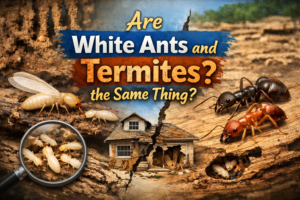
Here’s the truth that surprises many homeowners: there is no difference between termites and white ants. “White ants” is simply a colloquial nickname for termites, particularly subterranean and drywood species common in tropical and subtropical regions.
Myth-Busting: The term “white ant” likely originated because:
- Termites resemble ants in general body plan (six legs, segmented bodies)
- Their pale coloration distinguishes them from dark-colored ants
- They live in social colonies with specialized castes, similar to ant colonies
However, termites are NOT true ants. They belong to a completely different insect order (Isoptera or Blattodea) and have fundamental biological differences
| Feature | Termites (White Ants) | True Ants |
|---|---|---|
| Waist | Broad, straight connection | Narrow, pinched “wasp waist” |
| Antennae | Straight, bead-like | Elbowed, bent |
| Wings (reproductives) | Two pairs, equal length | Two pairs, unequal length |
| Diet | Wood/cellulose only | Omnivorous scavengers |
| Color | Pale, creamy, translucent | Dark brown to black typically |
| Visibility | Hidden in wood/soil | Often seen foraging openly |
| Damage | Destroys wooden structures | Generally nuisance, not structural |
Key Takeaway: If someone mentions “white ants,” they’re talking about termites. The distinction matters because termite control requires specialized treatments that differ significantly from ant control methods.
Are White Ants Visible to the Eye? Prevention Tips
To address the common question: are white ants visible to the eye? Yes, individual termites are absolutely visible roughly the size of small ants or grains of rice. However, the challenge lies in their behavior rather than their size.
Why They’re Hard to Spot:
- Colony location: The main nest and queen remain hidden underground or deep within wooden structures
- Nocturnal habits: Many species forage primarily at night
- Protected pathways: Workers travel through mud tubes or inside wood, rarely exposing themselves
- Silent workers: Unlike ants, they don’t wander openly across floors or countertops
Prevention Strategies:
- Eliminate wood-soil contact: Ensure wooden structures don’t touch soil directly. Use concrete foundations and maintain clearance between soil and wooden siding.
- Control moisture: Fix leaks promptly, ensure proper drainage around foundations, and use dehumidifiers in crawl spaces. Termites require moisture to survive.
- Remove food sources: Store firewood away from structures, clear dead trees/stumps, and avoid wood mulch near foundations.
- Annual inspections: Professional pest control companies use moisture meters, thermal imaging, and acoustic detectors to find hidden colonies before damage becomes severe.
When to Call Professionals:
- You discover mud tubes, discarded wings, or damaged wood
- Neighboring properties have active infestations
- You’re buying or selling a home (termite inspections are often required)
- You notice any signs of white ant activity mentioned above
Conclusion:
Now you know what do white ants look like, from tiny C-shaped larvae to creamy adult workers, and from subtle mud tubes to devastating structural damage. These “white ants” are actually termites destructive pests that cause billions in property damage annually while remaining hidden from casual observation.
Early identification is your best defense. By understanding their appearance at every life stage and recognizing the warning signs of infestation, you can catch problems before they require expensive structural repairs. Remember: seeing even a single termite often means hundreds or thousands more are hidden nearby.
Need Professional Help?
If you’ve spotted white ants in your Toronto home or business, don’t wait for the damage to spread. Nomore Pest provides expert Ant Removal Service Toronto with fast, effective, and guaranteed results. Our licensed technicians specialize in termite identification, colony elimination, and long-term prevention strategies tailored to Toronto’s unique climate and building styles.
Whether you’re dealing with an active infestation or want a preventive inspection, Nomore Pest has you covered. We use eco-friendly treatments that are safe for your family and pets while being tough on pests.