Many people get confused when they hear the term “white ants.” Are they a completely different type of insect, or just another name for termites? This confusion is extremely common, especially among homeowners who suddenly notice damage in their wooden furniture, doors, or even structural parts of their house.
At first glance, these tiny, pale insects may look like ants, which is why people often assume they belong to the same family. However, this misunderstanding can lead to delayed action—and when it comes to pests like termites, delay can be costly.
In this blog, we’ll clear up the confusion once and for all. You’ll learn what “white ants” really are, what termites actually do, how they differ from true ants, and most importantly, what steps you should take if you ever spot them in your home.
What Are White Ants?
The term “white ants” is not a scientific or technical name. It is simply a common or informal term that people use when referring to termites. This nickname has been passed down over time and is still widely used today in many parts of the world, including South Asia and Australia.
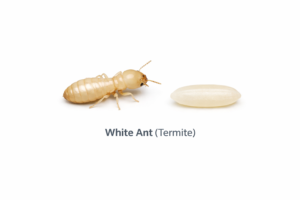
The reason behind this name is quite simple: appearance. Termites are usually pale, creamy white or light beige in color, and their body structure can loosely resemble that of ants.
Because of this visual similarity, people began calling them “white ants,” even though this classification is incorrect.
It’s important to understand that just because two insects look similar does not mean they are related. In the case of termites and ants, they actually belong to entirely different biological groups.
What Are Termites?
Termites are small, social insects that live in highly organized colonies. Unlike ants, they belong to a different order of insects and have unique behaviors and characteristics.
Here are some key features of termites:
- They are soft-bodied insects
- They live in large colonies that can range from hundreds to millions
- They primarily feed on cellulose, a substance found in wood, paper, cardboard, and plant material
In natural environments, termites play a very beneficial role. They help break down dead trees and plant matter, recycling nutrients back into the soil. Without termites, ecosystems would struggle to manage organic waste.
However, the problem arises when termites enter human homes. Instead of feeding on dead trees in forests, they start consuming wooden structures, furniture, flooring, and even books. This is when they turn from helpful recyclers into highly destructive pests.
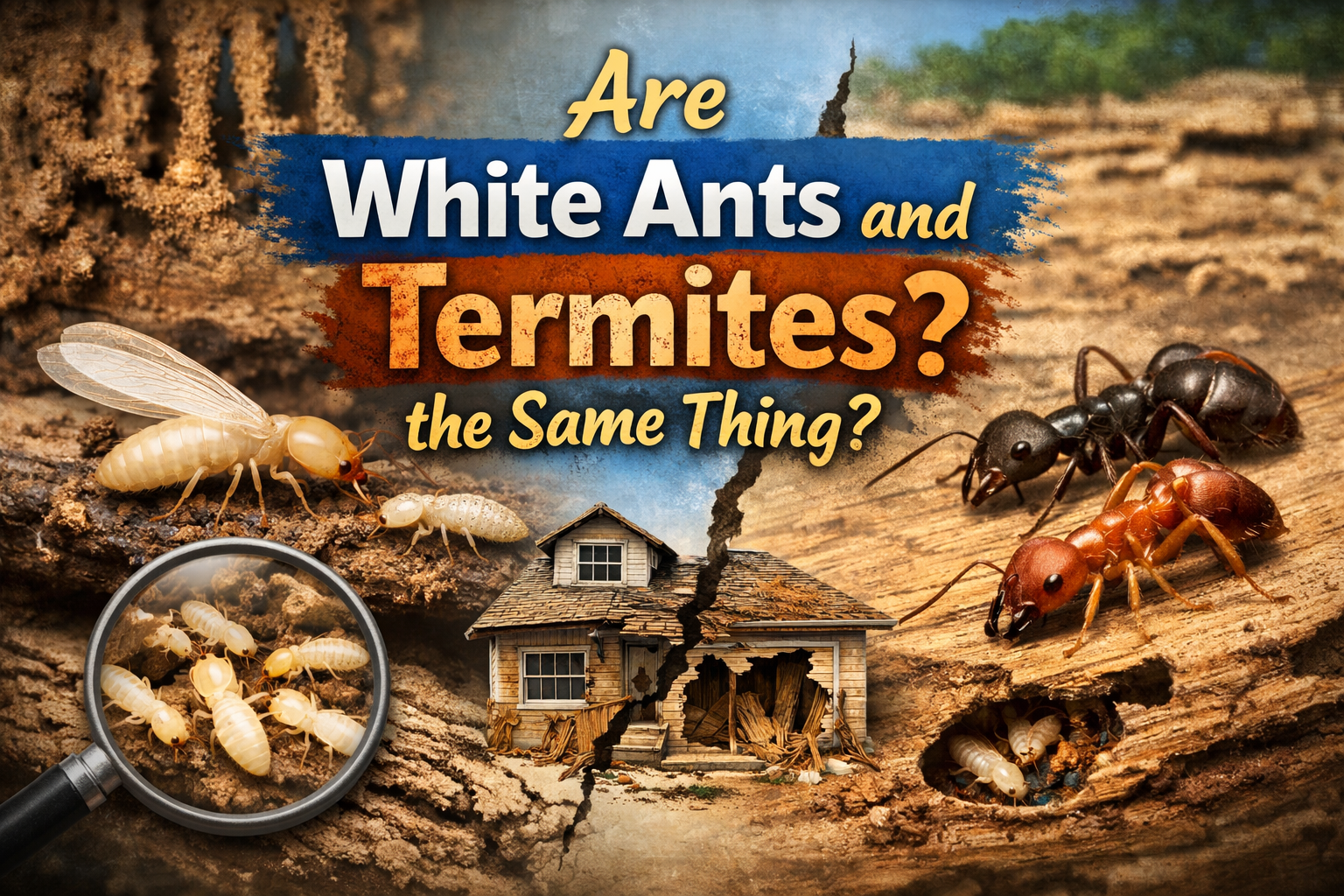
Are White Ants and Termites the Sam
Yes — white ants and termites are the same thing.
The term “white ants” is simply a misleading nickname for termites. Scientifically and biologically, they are not ants at all. The confusion exists purely because of their similar size, color, and social behavior.
Understanding this distinction is important because it helps homeowners take the right kind of action. Treating termites like regular ants can lead to ineffective solutions and allow the infestation to grow unnoticed.
Differences Between Termites and True Ant
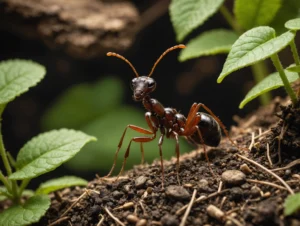
Although they may look similar at first glance, termites and ants have several noticeable differences when you observe them closely.
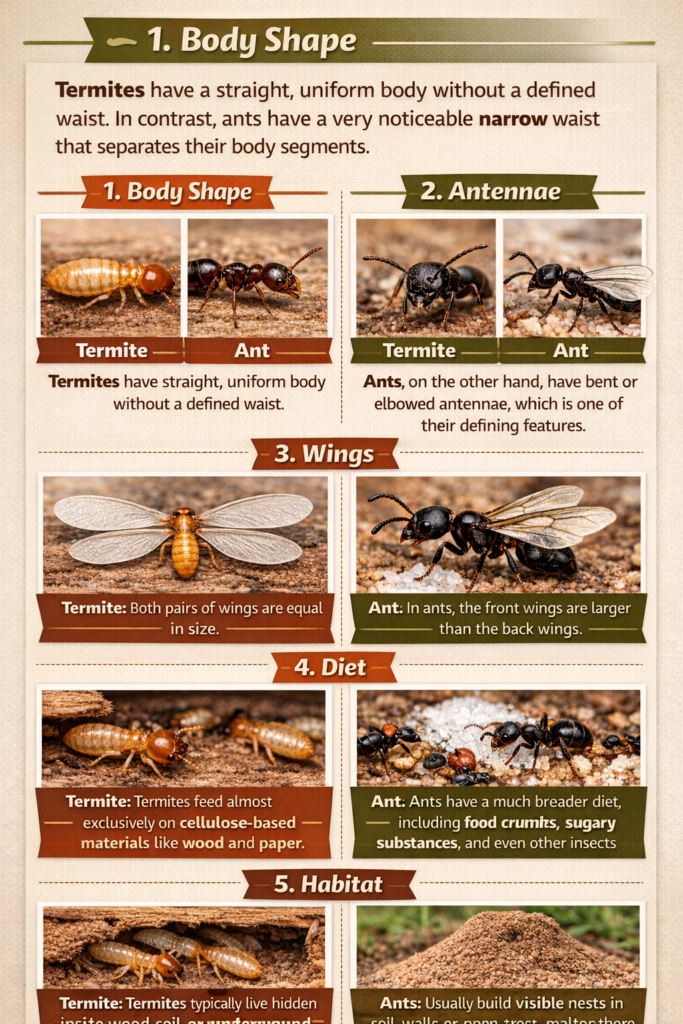
These differences are crucial for proper identification, especially when deciding how to deal with an infestation.
Why the Confusion Exists
There are several reasons why people continue to confuse termites with ants:
- Both insects are small and similar in color
- They live in colonies and have social structures
- Most people are not familiar with insect classification
- The term “white ants” has been used historically and culturally for years
Because of these factors, the incorrect name has stuck around, even though it can be misleading.
Are Termites Dangerous?
Yes, termites can be extremely dangerous—but not in the way most people think. They do not typically harm humans directly, but they can cause serious damage to property.
Termites feed on wood from the inside out. This means they can hollow out furniture, doors, and even structural beams without showing obvious signs on the surface. By the time visible damage appears, the internal structure may already be severely weakened.
Common signs of termite infestation include:
- Mud tubes along walls, foundations, or corners
- Wood that sounds hollow when tapped
- Discarded wings near windows, doors, or light sources
- Small, pale insects inside wooden areas
If ignored, termites can cause damage worth thousands—or even more—depending on the severity of the infestation.
How to Prevent and Control Termites
Prevention is always better than cure, especially when dealing with termites. Taking early precautions can save you a lot of time, money, and stress.
Prevention Tips:
- Reduce moisture levels in and around your home
- Fix leaking pipes, roofs, and taps immediately
- Avoid direct contact between wood and soil
- Store firewood or wooden items away from your house
- Schedule regular inspections to catch problems early
Control Methods:
- Chemical barrier treatments
- Soil treatments around the foundation
- Termite baiting systems
- Professional pest control services
While DIY solutions may work for very minor issues, they are often not enough for serious infestations.
When to Call a Professional
If you start noticing warning signs like mud tubes, hollow wood, or flying termites around your home, it’s important to act quickly. Waiting too long can allow the infestation to spread and cause even more damage.
At this stage, calling a professional pest control service is the smartest and safest option. A reliable brand like Nomore Pest can help you deal with the problem effectively and prevent future infestations.
With Nomore Pest, you benefit from:
- Detailed and professional inspection
- Accurate identification of termite activity
- Customized treatment plans
- Long-term protection and prevention strategies
Trying to handle termites on your own might provide temporary relief, but it rarely eliminates the root of the problem. Professionals use specialized tools and treatments to ensure complete eradication.
Conclusion
So, are white ants and termites the same? The answer is a clear yes. “White ants” is simply a misleading common name used for termites, but they are not ants in any scientific sense.
While the name itself may not seem important, understanding the difference is crucial when it comes to protecting your home. Termites are silent destroyers that can cause serious structural damage if left untreated.
By staying informed, taking preventive measures, and seeking professional help when needed, you can keep your home safe and termite-free.